
Progress over perfection
Improvement that sticks
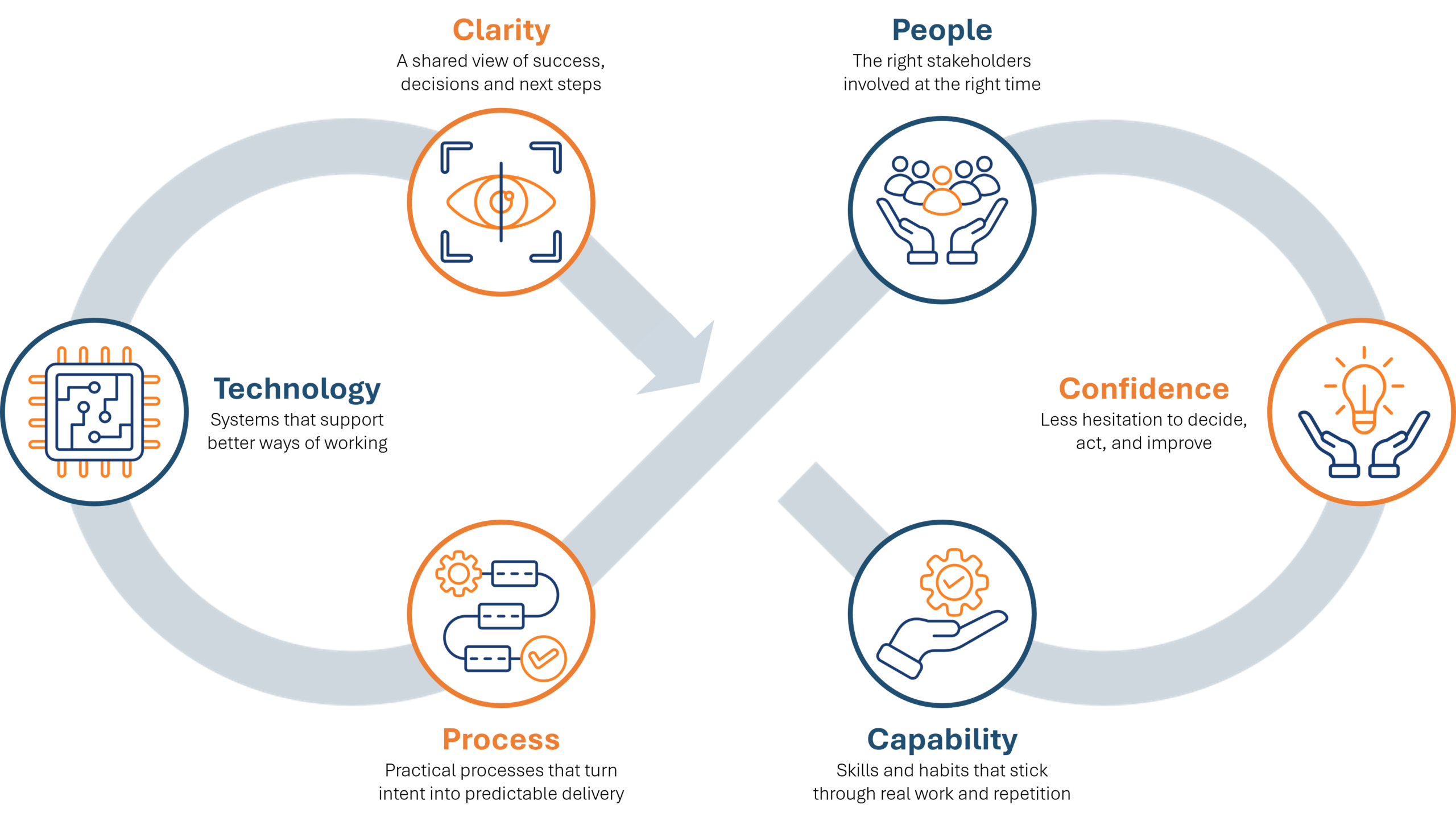
Building momentum and creating lasting improvements
across people, process, and technology.

Build Momentum
Create clarity and focus

Unlock Capacity

Make It Stick
Make improvement last
Do Any Of These Sound Familiar?
Everyone is busy. The challenge is finding the time and focus to work on the business while still running it.

To Get Ahead

Keep Coming Back

We’re Too Busy
To Improve

Good Ideas
Don’t Go Anywhere

We Know We
Could Do Better
Every Organisation Has A Different Starting Point
No two organisations face exactly the same challenges.

Businesses Are Under Pressure
Keeping up with day-to-day demands has become the priority, leaving little time to focus on improvement.

Some Need More Capacity
Growth opportunities exist, but teams are already stretched and struggling to find the time to pursue them.

Some Want To Work Smarter
Processes, systems, and ways of working feel harder than they should, creating unnecessary effort and frustration.

Some Want More From Technology
The tools are already in place, but there is an opportunity to get more value from existing investments and capabilities.
You don’t always need a major transformation.
The biggest gains often come from making small improvements consistently over time.

Improving a
routine process

Removing a
frequent bottleneck

Better use of
existing technology

Automating a
repetitive task
What Does Continuous Improvement Look Like?
The goal isn’t to work harder. It’s about making improvement part of everyday work.
Improvement starts when effort is focused in the right place. Identifying friction with clear priorities help organisations make progress without trying to fix everything at once.
From Frustration To Improvement
How Kambium helps you make small improvements to reduce everyday frustrations.

Every organisation has frustrations.
And many already know where things aren’t working as well as they should. Deadlines slip. Processes become harder to manage. Teams get stuck in reactive work. Good ideas sit on the backlog. The challenge is knowing where to focus first and how to create momentum to make meaningful progress.
Kambium can help with:
- Revealing where time is helping or hurting performance.
- Turning complexity into clearer, simpler ways of working.
- Uncovering the hidden drains on productivity and capacity.
- Making work easier to move, manage, and deliver.
- Focusing effort where it will create the most value.

Time in Motion
Reviews

Process Improvement
Mapping

Capacity Leak
Assessment

Workflow
Health Check

Opportunities
Assessment
Common Areas We Help Improve
The goal isn’t to work harder. It’s about making improvement part of everyday work.

Reducing Operational Pressure
When teams spend their days reacting, improvement gets pushed aside. Creating breathing room allows people to focus on the work that moves the business forward.

Simplifying Processes
Complex processes create frustration, inconsistency, and unnecessary effort. Simpler ways of working make it easier for people to do their best work.

Improving Productivity
Productivity isn’t about working harder. It’s about removing the barriers, delays, and inefficiencies that make work take longer than it should.

Using Technology Better
Most organisations already have powerful tools available. The opportunity often lies in using existing technology more effectively rather than investing in something new.

Creating Capacity
Growth, innovation, and strategic projects all require time. Creating capacity helps organisations focus on opportunities rather than just keeping up with demand.

Making Change Stick
Lasting improvement comes from changing habits and behaviours, not just just implementing new processes, technology or ways of working.
What does success look like?
Create time, capability and momentum to continuously improve.

Less effort spent on low-value work to focus on richer tasks



Teams identify and driving improvement opportunities

Improvements continue long after the initial initiative ends
Frequently Asked Questions
Where should we start?
Start with the areas or processes creating the most frustration, effort or delay.
Do we need a major program of works?
Not always. Small improvements made consistently often create the biggest impact.
How do we identify improvements?
Look for bottlenecks, repetitive or duplicated effort, and activities that add little value.
Why doesn’t improvement always stick?
Because habits, behaviours, and accountability weren’t addressed alongside the change.
Can technology solve our problems?
Technology can help, but improvement usually requires changes to people and processes.
How do we measure success?
Find this in productivity, capacity, customer experience, quality, and business outcomes.
Improvement Isn’t A One-off Activity
Your biggest opportunities for improvement already exist in your organisation.